

Why Dr. John Q. Cook Is the Right Body Surgeon for You
Dr. Cook has extensive experience with liposuction and all body contouring procedures. Many of these procedures can be performed under local anesthesia in our Chicago and Winnetka offices.
Dr. Cook was one of the first plastic surgeons in the Midwest to work with advanced radiofrequency devices (BodyTite®, FaceTite,®AccuTite®, and Morpheus®) that allow for skin and deeper tissue tightening, along with liposuction. This allows him to treat patients who have mild to moderate loose skin without the need to remove skin.
At the Whole Beauty® Institute, we offer patients the complete spectrum of non-invasive, minimally invasive, and surgical body contouring. We have extensive experience to know which will be the best choice for each patient.
For larger body contouring procedures, such as Abdominoplasty and Mommy Makeover, we provide recovery in a 5-star luxury hotel with an experienced nurse to get your recovery off to a good and safe start.
Education and Credentials

Awards and Recognition


REAL PATIENT RESULTS
See the difference experience makes. Scroll through before and afters in the photo carousel of liposuction patients treated by Dr. Cook and his team.
Liposuction
Sophisticated Sculpting of Your Body’s Curves and Contours with Surgical Fat Reduction in Chicago and Winnetka
Whole Beauty® Institute patients benefit from the extensive experience of Dr. John Q. Cook in all forms of liposuction. Chicago-area women and men seeking surgical fat reduction for slimmer contours have several techniques available to them. Dr. Cook will work with each individual to determine the ideal approach, because every patient is different: How we gain fat is determined largely by our genetic makeup, but also in part by patterns of nutrition and exercise. If you are very lucky, the fat you gain will be distributed in a uniform way throughout the body. Much more commonly, the fat will go to specific zones, such as the abdomen in men and the hips and outer thighs in women.
This process of excess fat accumulation in one or more specific areas is referred to as lipodystrophy. Successful lifestyle changes—such as limiting calorie intake and engaging in routine physical activity—can be successful in reducing these areas, but even these efforts have drawbacks. It is impossible to specifically target zones of lipodystrophy, with some pockets stubbornly resisting both diets and exercise. Also, areas that do see a reduction do not lose fat cells. The number of fat cells stays the same; they simply grow smaller. In the future, these fat cells can grow larger again, creating the unwanted bulge once more. Liposuction addresses both of these limitations, allowing for a targeted approach that can physically remove fat cells from specific zones.
What Are the Different Liposuction Techniques Available?
Despite the cosmetic limitations of a structured program of diet and exercise, it is always best to address a zone of excess fat with a lifestyle-focused strategy. This may be all you need to lose the unwanted volume.
More commonly, however, the fat will remain—but you will have laid a foundation for long-term success, especially if you seek treatment in the future. The fat reduction and body contouring options available at The Whole Beauty® Institute include classical liposuction, Vaser® lipoplasty, fat grafting, SculpSure®, Evolve®, laser lipoplasty, and radiofrequency fat reduction and body tightening.
Our goal is to provide you with a path to improving body contours that takes into account your nutritional and exercise patterns, your goals, and your time available for recovery from liposuction or other surgery.
Liposuction Under Local Anesthesia: 10 Things You Should Know
At the center of our patient care is an individualized approach to liposuction treatment for each person who comes to our Winnetka and Chicago offices. This includes an in-depth liposuction consultation that incorporates an evaluation of lifestyle and patterns of activity, general health, and expectations regarding the surgery. Before deciding on liposuction (or any procedure or treatment), we will also analyze the different layers of your body—including bone, muscle, and fat—as well as skin tone and fat distribution. The consultation will also involve educating you as to the typical outcomes for your body shape.
A Brief History of Liposuction Techniques
If you had zones of excess fat before the 1970s, your only option was surgery that involved long incisions and direct removal of the excess fat. The only areas where this worked half decently were the abdomen (as with a tummy tuck) and the breast (breast reduction). In other areas, the scars were a bad trade off, and it was hard to remove the fat in a manner that left a pleasing contour.

Contact Whole Beauty® Institute in Chicago or Winnetka for more information about liposuction cost, recovery, and other details. Call 312-751-2112 or send a message online.
Request a consultRead More...
Classical Liposuction Technique
The person who moved the ball forward was a French surgeon named Dr. Illouz. He figured out that if there was a zone of excess fat, you could reach it by making a small incision and passing a long metal tube with one or several holes on the end into the excess fat. The surgeon could move the tube back and forth to break off pieces of fat, which would be sucked out of the body through plastic tubing connected to a suction pump.
This inelegant description is exactly what early liposuction was like. The early instrumentation was crude and made little distinction between fat and other structures, such as nerves and blood vessels, so there was quite a bit of trauma with the procedure. Liposuction recovery was often long and painful, and bruising could last for months.
Refinements of Classical Liposuction
In Dr. Cook’s opinion, the next great leap forward in liposuction occurred as a result of two technical developments: the popularization of what is now called tumescent liposuction and the development of better instrumentation. With tumescent liposuction, the surgeon introduces a special solution into the treatment zone. This solution is essentially a mixture of salt water, local anesthesia, and an agent that constricts blood vessels. This makes the fat easier to extract and cuts down quite dramatically on post-liposuction bruising. It also makes it easier to work with more sophisticated, smaller diameter cannulas to extract the fat. This, in turn, leads to a smoother result—at least in the hands of a skilled liposuction surgeon. As results became better and more consistent and recovery became easier, the popularity of liposuction exploded.
Ultrasonic Liposuction and Vaser® Lipoplasty
Just when everything seemed to be standardized with lipoplasty techniques, along came an Italian plastic surgeon named Dr. Zocchi. He was experimenting with the effects of ultrasound on different body structures when he discovered that certain frequencies of ultrasound were very good at breaking apart fat cells while leaving other structures unharmed. He realized that this might make ultrasound a useful technology for liposuction, and he developed a technique that harnessed ultrasound’s possibilities. As with any potentially disruptive technology, there was a mixed reaction among plastic surgeons when Dr. Zocchi began to present his work at American meetings. It seems that when something new comes along, plastic surgeons tend to divide themselves into three groups: the fat and happy, the intellectually curious, and the eager early adapters.
The “fat and happy” surgeons were very busy in their practices with classical liposuction, perhaps to the point where they really didn’t want to be much busier, so they viewed the introduction of a potentially disruptive technology with annoyance and tended to disparage it. The “eager early adapters” were typically young plastic surgeons not far out from the completion of their training, who were looking for a vehicle to distinguish themselves from the established surgeons in their community. They were open-minded as to new possibilities in liposuction, but perhaps a little too eager to jump on the next bandwagon without doing all their homework. Fortunately for the field, the organized structure of plastic surgery professional organizations at the time had a sufficient number of the third group—the “intellectually curious”—that a concerted effort was made to work with the FDA in order to evaluate this new liposuction technology and introduce it to surgeons with the proper qualifications.
The net effect of this process was that ultrasonic liposuction was introduced in a highly structured way to board-certified plastic surgeons. Some chose to adopt the technology; others did not. There tended to be relatively few complications, because the surgeons who chose to use the new technology of ultrasonic lipoplasty were experienced and properly credentialed. To this day, there are surgeons who prefer classical liposuction because of its simplicity and those (like Dr. Cook) who feel that various forms of ultrasonic liposuction impart an advantage, especially in certain zones.
Ultrasonic liposuction has evolved since its introduction and has reached a level of sophistication that makes it a “workhorse” for many busy plastic surgeons. Vaser® lipoplasty is, in Dr. Cook’s opinion, the most advanced form of ultrasonic liposuction that is widely available in the United States. He has used this technology in more than 1,000 patients with a very high level of success. The character of the ultrasound can be varied in ways that allow for a very specific approach to different zones of fat. With a highly experienced surgeon, there may be a moderate degree of tightening of the treated area, but not to the degree that can be obtained with laser lipoplasty.
Power Assisted Lipectomy (PAL)
PAL or power-assisted lipectomy is a technology that some surgeons utilize for speed and comfort. Rather than manually pushing the cannula back and forth to remove fat, the liposuction surgeon uses a device that mechanically moves the cannula back and forth. Some surgeons feel this makes them less fatigued for longer liposuction sessions.
Laser Liposuction, SmartLipo®, and SlimLipo®
Laser liposuction has a number of similarities to ultrasonic liposuction. The treatment sequence is similar: first the introduction of the tumescent solution to prepare the area that is to be treated, then the application of energy, then the extraction of the melted fat.
The two most important distinguishing characteristics of laser liposuction are the ease of application under local anesthesia and the tightening effect that occurs with this technology.
Dr. Cook has worked extensively with both the SmartLipo® and SlimLipo® technologies of laser liposuction. Our patients appreciate the convenience of an office-based procedure under local anesthesia with a limited recovery. They also benefit from the extensive experience and artistic vision of Dr. Cook.
Radiofrequency Fat Reduction and Tightening
In the last few years, radiofrequency-assisted liposuction has emerged as an attractive option for fat reduction, especially for individuals who have looser skin. Dr Cook was the first plastic surgeon in the Midwest to work with the BodyTite® technology. Because of the significant tightening that it provides, this is now our most frequently applied lipo technique.
A Closer Look at Ultrasonic Lipoplasty, Laser Liposuction, and Non-Surgical Fat Reduction
Laser Liposuction
Some patients have several relatively generous zones of excess fat and want it all removed in a single liposuction surgery. A typical example in a woman might be someone with excess fat in the hips, flanks, abdomen, outer thighs, inner thighs, and knees. A typical example in a man might be excess in the hips, flanks, and abdomen.
These patients are well served by the efficiency of Vaser® ultrasonic lipoplasty performed at a premium-quality surgicenter near our Chicago office. This liposuction technique will be carried out with the patient under a light general anesthetic or under intravenous sedation. Most patients will recover at home, but is its also possible for them to recover at a luxury hotel in the same building as the surgicenter.
Some patients have relatively small zones of fat excess and prefer to avoid any form of anesthesia other than a local anesthetic. These patients will be delighted to find that we can perform their surgery using a laser liposuction technique under local anesthesia in both our Chicago and Winnetka offices. We offer both the SmartLipo® and SlimLipo® laser lipoplasty techniques.
If there are several zones of fat that need to be treated, it is usually possible to schedule two or three laser liposuction procedures with a short time interval between each treatment.
At the Whole Beauty® Institute we offer our patients the two leading technologies for laser liposuction.
In these videos below, patients share their experience with Laser Liposuction.
Laser liposuction, also referred to as laser lipoplasty, is the most recent technique utilized by plastic surgeons to remove excess fat from problem areas of the body. Plastic surgeons that use this particular technique follow a sequence of three steps. First, the surgeon painlessly injects a fluid that contains local anesthetic into the area that needs to be sculpted. After waiting for the local anesthesia to take effect, the liposuction surgeon introduces a tiny tube under the skin that delivers laser energy to the zone that is to be treated. Finally, the surgeon uses another tiny tube to draw off the melted fat.
This laser energy has two effects: First, it causes destruction of unwanted fat cells. There are plenty of videos on the Internet that demonstrate this process and make for dramatic pictures that are fun to watch. Second, if applied with skill, this energy can help to tighten the tissue of the zones the liposuction surgeon treats. This can be particularly helpful in the arms and neck.
One particular advantage of laser liposuction is that it really can be scheduled during any season. With other forms of liposuction, the recovery period is longer, and it is necessary to wear elastic support garments for many weeks after the surgery. With laser SmartLipo® and SlimLipo®, the period where you will need to wear support garments and stay away from heavy exercise is shorter when compared to other forms of liposuction. Less “down time” means that it is much easier to fit the procedure into your busy schedule, even during the summer months.
Read More...
What is the patient experience like with SmartLipo® and SlimLipo® Laser Liposuction?
Since the laser liposuction procedure is done under local anesthesia, you can eat a normal light meal the day of surgery and keep a good state of hydration with water, juice, or other beverages. Coffee and tea drinkers do not have to skip their morning cup. This alone makes the entire experience more enjoyable.
You arrive at our office and will be given medications that gently relax you. Dr. Cook will mark the areas that you have previously discussed at your consultation, and you are ready for your liposuction procedure.
In the operating room, Dr. Cook will inject a local anesthetic and make tiny incisions for the treatment. He then gently introduces the fluid that prepares the area for surgery.
After a period of relaxation, Dr. Cook will apply the laser energy to the area of excess fat and then extract the fat from the treated zone.
During the laser liposuction procedure, you can bring your favorite music and listen to it. Before you know it, the procedure is finished. Our team will help you into your garment. Your will feel a little stiff in the area where you were treated, but you will be able to move comfortably and calmly.
What are the advantages of Laser Liposuction (SlimLipo® and SmartLipo®)?
Why bother, you might ask, with yet another technology when other liposuction methods work reasonably well? In Dr. Cook’s opinion, there are several specific advantages that make laser liposuction compelling:
- Laser liposuction can be carried out under local anesthesia in the office.
- There are cost advantages, since the fees of the anesthesiologist and surgicenter can be avoided.
- The procedure is less traumatic than with other liposuction techniques, so that the overall patient experience is much better.
- Because the procedure is less traumatic, recovery is much quicker and easier than with other liposuction techniques.
- Most patients can return to work within one to two days of the treatment.
- The incisions for the surgery are a little smaller than required for most alternative liposuction techniques.
- There is actually some tightening that occurs with this procedure, making it well suited for necks and arms.
How is the recovery from SmartLipo® and SlimLipo® Laser Lipoplasty?
The fluid that we injected to prepare you for laser liposuction contains a local anesthetic, so this makes your early recovery relatively easy. Most patients will take a mild pain reliever, such as Tylenol®, for the first day or two, and some patients will take a stronger pain pill the first evening after surgery.
You can do normal light activity after your laser liposuction surgery, but you should avoid heavy exercise. Most patients can return to work within two days after the surgery.
What is the most important factor for success with laser liposuction?
Just because the overall experience of laser liposuction is relatively easy from the patient’s perspective, this does not mean that it is easy for the surgeon to obtain excellent results. There is a high degree of skill required of the surgeon who carries out this type of surgery. In this regard, it is no different from any other form of liposuction.
Because laser liposuction can be carried out so nicely in the office setting, it is possible for a clinician with little surgical training to obtain this technology and begin treating patients. The results can be disastrous.
It took Dr. Cook a while to overcome his own negative impressions of laser liposuction because of the horrible results he saw in patients who came to him for help after having undergone the procedure in various “medispas.”
He might still not be avoiding this procedure, but for the fact that one of the plastic surgeons he trained in the plastic surgery residency at Rush University Medical Center, Dr. Spero Theodorou, invited him to visit in New York City and witness first-hand how wonderful this liposuction technique can be in skilled hands. Dr. Theodorou’s results were excellent, and the overall patient experience was superior to what occurred with other forms of liposuction.
It was then Dr. Cook realized that the bad results he was seeing were not related to the underlying technology of laser liposuction, but were a direct result of the lack of training of the people who performed these procedures. In other words, an untrained and poorly credentialed practitioner will wreak havoc with any type of liposuction: classical, ultrasound, or laser.
Please look for a highly experienced surgeon with the proper credentials. One good way to do this is to see if the person providing liposuction is certified by the American Board of Plastic Surgery.
Why does laser liposuction work so well under local anesthesia?
Laser liposuction is the first liposuction technique that Dr. Cook feels works well under local anesthesia in an office setting. He has extensively worked with all previous liposuction techniques—including classical liposuction and Vaser® lipoplasty—and when he has utilized them with the patient under local anesthesia, it can be a frustrating and uncomfortable experience for the patient. He has carried out a large number of liposuction procedures with these techniques, but virtually all of them have been in the surgical center under deep sedation or general anesthesia.
With laser liposuction, the patient experience is fundamentally different. There is simply much less discomfort when the fat is melted in the laser lipolysis technique than when it is mechanically broken apart in classical liposuction or treated with various forms of ultrasonic liposuction.
With all types of liposuction, including laser, not everyone is suited to a local anesthetic technique. Some patients who are fearful of the medical environment may do best under IV sedation or a light general anesthetic.
What is the explanation for the difference between these different techniques of lipolysis?
It is fairly easy to explain the difference when we are contrasting classical liposuction with a laser liposuction technique, such as SmartLipo® and SlimLipo®. With classical liposuction, fat is simply pulled into the end of the tube with suction and broken off with the cutting edge of the holes in the tube. This process is relatively traumatic and nonselective, so that a certain number of nerves and blood vessels are traumatized as well. This hurts. With laser lipolysis, the fat is melted by the application of a selective wavelength of laser energy, so there is less collateral damage. Dr. Cook can’t offer scientific proof that this is the reason for the difference, but it seems a good common sense explanation.
Why is laser lipo so much better tolerated under local anesthesia than ultrasonic liposuction techniques, such as Vaser®?
One possible explanation is that the entire length of the cannula used to deliver the ultrasonic energy is hot, a fact readily appreciated by the surgeon who inadvertently grasps the cannula by its side while energy is being delivered. The SmartLipo® cannula is hot only at its tip, where the laser energy is being delivered to the fat.
Whatever the explanation, the fact remains that laser liposuction enables the surgeon to treat a wide variety of patients under local anesthesia in the comfort of an office setting.
Can laser liposuction be used specifically on the arms?
A brachioplasty, or arm lift, is a traditional procedure performed to remove excessive skin and fatty deposits in the upper arm area. However, traditional techniques have a tendency to leave loose skin and scars that many patients are either reluctant to accept or results they are not entirely satisfied with. In the past, Dr. Cook has been frustrated by the lack of good options available to treat this area. Classical or ultrasonic liposuction treatments did not produce ideal results, and many patients who were self-conscious about the appearance of their upper arms did not want the scars from the brachioplasty operation. There wasn’t a good choice.
At the Whole Beauty® Institute, our patients have been delighted with laser liposuction as a means of achieving slimmer arms. This new technique yields a higher degree of tightening in the skin. Therefore, it allows for many new possibilities in the treatment of excessive fatty deposits in the area.
Laser liposuction truly has been a game changer for the arms. This is because the treatment delivers two wavelengths of laser energy that melt the excess fat and also tighten up the supporting structures of the arm. Add to this the other advantages of this treatment: local anesthesia, tiny incisions, less time in a supportive garment compared to other techniques, and a quicker recovery to normal activity. It is easy to see why this procedure has become very popular in such a short period of time.
Nonsurgical Fat Reduction
In the last few years, several non-invasive techniques of fat reduction have been introduced to the American market—and more are on the way. These devices use heat, cold, radiofrequency, and other forms of energy to reduce fat deposits in the body. Some of these technologies will produce a modest reduction in treated zones, but Dr. Cook has never seen results that equal what can be accomplished with any form of liposuction: classical, ultrasonic, or laser.
For nonsurgical fat reduction, we make use of the Evolve® Trim, Tite, and Tone technology.
Liposuction Questions and Answers with Dr. John Q. Cook
According to statistics from the American Society for Aesthetic Plastic Surgery, liposuction is one of the most common cosmetic procedures performed in the United States. Why do you think this is the case?
Could you describe for me your ideal patient?
An ideal liposuction candidate would be someone who exercises regularly, is careful about diet, and has not experienced major weight fluctuations. They are close to their ideal body weight. Despite these measures, they have certain zones of fat that have been resistant to diet and exercise, and the skin tone in these areas is excellent. Their goal is to improve the visual harmony of the body, as well as to improve the fit of clothes across certain zones of the body. Of course, the person should be in excellent health.
Obviously, someone who falls into this ideal category is likely to get an ideal result. I don’t mean to imply that I don’t operate on anyone outside of this category, but it is just that as we move further away from this ideal, clear and accurate communication between the doctor and patients becomes very important to achieve the best possible liposuction results.
Is there an age limit for liposuction surgery?
I do not have arbitrary age limits. When I am evaluating a liposuction candidate, I am looking at the patient’s goals, the quality of the patient’s skin tone, and the patients’ general health. There are patients in their 20s who I turn down for liposuction surgery, and there are some in their 60s who are acceptable candidates. It all comes down to a matter of individualized assessment.
What happens if you perform liposuction outside of these areas?
In general, when you perform fat-reduction surgery outside of the classical zones where the fat is organized in a different way, it is much more likely that there will be undesirable surgical consequences, such as diminished skin tone or surface irregularities. I am not saying that I never perform surgery outside of the classic zones, but it is just that doctors who do so have to very carefully evaluate each patient. In the classic zones, we will often perform what I refer to as finesse liposuction. This is in an individual who is already in very good shape, for whom a relatively minor adjustment of contour may be done to further improve the artistic lines of the body. It would be a mistake to perform this type of surgery outside of the classic zones, because the risk/benefit ratio would not be in the patients’ favor.
Read more Liposuction Q&A with Dr. John Q. Cook
What happens if you perform liposuction outside of these areas?
In general, when you perform fat-reduction surgery outside of the classical zones where the fat is organized in a different way, it is much more likely that there will be undesirable surgical consequences, such as diminished skin tone or surface irregularities. I am not saying that I never perform surgery outside of the classic zones, but it is just that doctors who do so have to very carefully evaluate each patient. In the classic zones, we will often perform what I refer to as finesse liposuction. This is in an individual who is already in very good shape, for whom a relatively minor adjustment of contour may be done to further improve the artistic lines of the body. It would be a mistake to perform this type of surgery outside of the classic zones, because the risk/benefit ratio would not be in the patients’ favor.
Are there any other things that you look for in a patient in order to predict the success of liposuction surgery?
Yes. When I look at my patient, I always have in the back of my mind what I refer to as the four keys. The first is a classic zone of fat distribution with the rest of the body in relatively good shape. This is the one we have already talked about. The other important criteria are that the skin tone should be acceptable, that the patient should be in good health without significant medical problems, and that the patient’s expectations should be realistic relative to what contemporary liposuction techniques can offer.
Are there any other things that you look for in evaluating a liposuction patient?
I believe that the holistic approach for the patient seeking liposuction or any body contouring surgery is absolutely essential. You can’t separate a surgical procedure from the context of a patient’s lifestyle and activities if you are truly interested in providing a good long-term outcome for your patient. A patient may appear to be a good physical candidate for the procedure, but if you find out that this is the type of patient who really doesn’t have a good exercise program and is constantly cycling up and down in their weight, there is a very high probability that the result will be mediocre. It makes me sad when I see patients who haven’t been dealt with honestly in this regard—where they have been promised some sort of a quick fix, and no one has taken the time to try to figure out whether their lifestyle is an appropriate balance for liposuction surgery. The patient’s interest should always be put first, even if that means telling the patient no.
You mentioned that liposuction has gone through a process of technical refinement. Could you describe this a little more for me?
I have very much enjoyed witnessing and participating in the evolution of body contouring surgery. When liposuction was introduced to this country in the mid ’80s, it was relatively crude. Nonetheless, it represented a significant advance over the only other option that was available at the time. Previous body contouring surgery techniques resulted in very long scars in common locations, and this was unacceptable for most people in the United States. The great advance in liposuction came when doctors realized that fat could be extracted through relatively small incisions, using long hollow tubes called cannulas. The first liposuctions resulted in significant bleeding and bruising, and the amount of fat that could be removed safely in a single session was quite limited. There were also problems with the finished details of the work, since the initial cannulas used for liposuction were very large and tended to produce irregularities. We then entered into a refinement phase, as people began to design the cannulas smaller and with different tip configurations, so that there was more finesse in the liposuction procedure.
The next big liposuction advance came in the early ’90s, when it became widely appreciated that there was an advantage to introducing fluid into the area of liposuction prior to the fat extraction. This fluid, which is the same solution used in an IV, was mixed with a local anesthetic and a vasoconstrictor know as epinephrine. To those of us who were working with this liposuction technique at the time, the advantages of this advancement were very apparent. I found that the fat came out more easily and more uniformly. There was also much less bruising and blood loss, so that it become possible to contour several zones at the same time.
By the mid 1990s, I became very intrigued with the technique known as ultrasonic liposuction, pioneered by an Italian surgeon. Here, the concept of fat removal was fundamentally different from what had come before. The earliest liposuction techniques were essentially a mechanical disruption of the fat, followed by suction to withdraw it. With ultrasonic liposuction, ultrasonic energy of a specific frequency is used to break apart the fat cells, and specialized cannulas are then used to remove the fatty material. I was intrigued when the early pioneers of this liposuction technique began to present results that, quite frankly, were better than what I was obtaining at the time. I become very interested any time this sort of thing happens, because I always want to advance the state of the art for my patients. As with any new idea, it is important to figure out whether this is just hype or whether there really are advantages. After carefully investigating it, I began to use the liposuction technique in selected patients. I was one of the earliest adapters of this liposuction technique in the Chicago area, and as I worked with it, I found that the results I was obtaining really were better than what I had obtained with the classical techniques—especially in certain zones.
I have continued to advance my technique of liposuction as new technologies become available. I now make frequent use of techniques that employ laser and radiofrequency energy.
Could you describe for me what the liposuction surgical experience is like?
One of the most important steps in liposuction surgery actually occurs before the operation itself. This is when I meet the patient in the pre-operative area and make detailed topographical markings on the body to guide me during the surgery.
When I perform surgery at the surgicenter, there is very little recollection that goes on from the patient’s perspective. The surgery is mostly carried out under a very light general anesthetic, so that there will be no memory of the actual events of the surgery. The liposuction patient will wake up in a private recovery room. He or she will be wearing the appropriate support garment, usually with some extra padding in place to put pressure on the zones where I have extracted the fat. Most liposuction patients tell me they feel a little chilly, but are not particularly in pain. This is because the solution that I put in prior to the liposuction has a local anesthetic. Most patients will be able to go home after an hour to an hour and a half.
When I perform surgery with the patient under local anesthesia with oral sedation in my Chicago or Winnetka office, the patient is pleasantly relaxed during the procedure. Often, he or she will take a short nap while I am performing the surgery. When the surgery is finished and the garment is in place, the patient walks from the operating room to the recovery area and is able to go home in a short while.
The next few days are essentially spent in couch-potato-type activities. It is okay to get up and go for a short walk—in fact, this is encouraged—but we don’t want excessive motion across the areas of surgery. Most liposuction patients will come back to see us in three to four days, at which time the preliminary support garment is removed, and they are fitted with a fresh support garment. From that point forward, the patient may shower as he or she desires and return to work as long as it does not involve extremely stressful activity. The patient is usually able to resume gentle exercise such as walking, treadmill and Stairmaster by the middle of the next week. I don’t want to see exercise that causes a shearing motion across the zones of liposuction or extreme exercise for several weeks.
I do believe that the support garment is very important. This is a girdle with zippers on either side, which applies compression to the zones of the liposuction surgery. I think that this helps to squeeze the swelling out and hold the skin in
place so that it will settle into a good pattern.
It seems to me that one of the hardest things in performing liposuction surgery would be to judge just how much fat you want to take. Is that the case?
I think this is one of the most important aspects of body-contouring surgery, and there is absolutely no substitute for the experience of the surgeon in this regard. To rephrase your question a little bit, not only is it important to consider how much fat you take during liposuction, but even more important is how much you leave. Some of the newer techniques are very powerful. Unfortunately, in inexperienced or injudicious hands, this can lead to some very sad outcomes.
What happens if you overdo it?
If you “overdo” liposuction, you lose the beautiful curves of the body, and you get loose skin. I guess it all comes down to a matter of artistic vision. For me, body contouring surgery is about adjusting the curves, not eliminating them.
What can patients do to make sure they not only have a good outcome, but a safe one?
That’s another very important question. In general, there are several factors, which, in my opinion, significantly increase the riskiness of the procedure that every patient should be aware of.
The first problem can occur when an injudicious surgeon chooses to extract very large volumes of fat, especially in the outpatient setting. Under these circumstances, between the amount of fluid that is added to the body prior to the liposuction and the amount of fluid and fat that is removed, there can be some very significant changes in the patient’s physiology—not unlike those that occur with trauma. Unfortunately, we now see people taking weekend courses and proclaiming themselves experts in this type of surgery, when they haven’t even studied the basics of surgical physiology or had no practical exposure to it in their training. This leads them to underestimate the risks of what they are putting their patients through and really push the envelope. I, for one, am not interested in using liposuction to extract massive volumes of fat from people. Most of these people have an eating disorder, and they are just going to put the fat back on, even if the procedure could be done with safety.
A second problem comes up when surgeons are not strict in their criteria for patient selection. If, for example, a patient has a heart problem, why should you do elective surgery like this? Of course, if you combine poorer patient selection with large-volume liposuction, they are really flirting with disaster.
Last but not least, there is the issue the surgeon’s quality and training. It is a matter of considerable personal sacrifice for an individual to obtain the full training necessary to be a board-certified plastic surgeon. There are always individuals who will want to cut corners and take the shortcut. The problem with people who take weekend courses is that they may be seduced into believing that they really are doing a simple piece of surgery—but not understand in any way the physiology of what they are doing. This is where truly frightening things can occur.
How do you select a doctor to perform liposuction?
I would certainly recommend that anyone considering liposuction surgery should check the doctor’s educational credentials very carefully. If that doctor doesn’t have a strong background in surgery and surgical physiology, then you might want to think seriously about looking elsewhere. The reason for this is simple: These doctors may not even be aware of the potential for danger and so blunder into situations that a more knowledgeable physician would avoid. Look for doctors who are certified by the American Board of Plastic Surgery and members of the American Society of Plastic Surgery, since they have gone through many years of advanced training. Ask about a doctor’s hospital admitting privileges. After you have lived in an area for a while, you have a general sense of which are the better hospitals—and even doctors who perform surgery in their offices must maintain hospital affiliations.
Why is skin tone important when you evaluate a patient for liposuction?
This is probably one of the easiest traps for the inexperienced surgeon to fall into. If you evaluate a patient without assessing skin tone, she may appear to be a very good candidate for the surgery; yet when you extract the fat, the skin does not contour in properly. It may even hang loose in folds or have other irregularities that will be very annoying to the patient.
What causes patients to lose their skin tone? Is it mostly a function of aging?
Aging may be a part of it, but actually that is not the most important thing. We often see this in people who have a history of very significant weight fluctuation, where they go up and down in their weight and engage in crash diets. This often breaks the elastic fibers of the skin and leaves them in a position where liposuction really won’t produce a very artistic result. Some patients also lose skin tone in the abdominal area when they go through one or several pregnancies. Of course, there are some patients who can carry six children and yet have beautiful skin tone, so this is a highly individual matter. There is also just a genetic component. Some people have very stretchy skin and this will affect the result on anything that I do, be it a facelift or body contouring surgery.
Will exercise help skin tone?
I am always the biggest fan of exercise, but if the skin tone has really been harmed, exercise alone won’t do it. Of course, I will still encourage patients to exercise because of all the other benefits, including tightening of the deeper support structures, which can be beneficial in body contour with or without surgery.
Can anything be done surgically to help patients who have diminished skin tone?
Absolutely. This is where the advanced techniques of body contouring surgery can be a very real benefit to the patient. These include techniques such as abdominoplasty, where not only is extra fat removed, but the skin is tightened, as well as the deeper supporting structures of the abdominal wall. These are more involved techniques, however, and require a longer recovery period than what is typically seen with liposuction. In the past few years, I have used radiofrequency assisted liposuction, which helps to tighten the skin and deeper tissues.
What about the patient who does have some loss of skin tone, but just wants clothes to fit better? Is there any role for liposuction in this patient?
This, of course, would be an important issue to discuss with the patient. If the skin tone isn’t great, the result won’t be great, either, but sometimes there are some zones that are more accommodating than others. One area that frequently bothers patients is the hip region, and this can sometimes respond well to liposuction, even with moderate skin tone loss. It all gets back to placing patients’ needs first and communicating accurately with them.
A Note About Cellulite
Surface irregularities known as cellulite are often associated with fat, but while excess volume in specific areas—such as the thighs or buttocks—can contribute to the problem, fat is not the cause. That means liposuction is not a cellulite solution.
Unwanted dimpling occurs when connective bands below the surface of the skin, known as septae, are pulled taut. This can happen even in slim patients, but fat pockets that cause the surface to push outward can make the condition worse. For patients who want to diminish cellulite, we have several technologies that can help, including Cellulaze® and Evolve®.
The Whole Beauty® Liposuction Advantage
During his eight years of advanced training and more than 20 years of independent practice as a plastic surgeon, Dr. Cook has directly participated in the developments that have led to today’s refined techniques of liposuction and other body contouring surgeries. He has personally performed more than 2,000 liposuction procedures and has extensive experience in all the major techniques of liposuction, from classical technique, through Vaser®, and on to SmartLipo® and other laser liposuction techniques. He is pleased to offer his patients advanced techniques of radiofrequency liposuction.
Our patients also benefit from Dr. Cook’s well-developed visual aesthetic. Dr. Cook’s lifelong study of art and visual aesthetics serves his patients well. Liposuction is about much more than removing fat; it should be about creating pleasing contours. It is important that the patient have an understanding of what will look beautiful on a patient if he is to achieve a sophisticated result.
Dr. Cook’s decades of experience with fat transfer are yet another benefit to his patients. Very often, in order to create the most aesthetically attractive lines in the body, it is beneficial to add fat to low points in addition to removing fat from high points. If this can be of benefit to you, Dr. Cook will explain this during your consultation.
Liposuction should not be regarded as a “quick fix.” If it is integrated into a holistic pattern of patient care, the results will offer long-term value to our patients. A commitment to long-term value is one of the defining philosophies of our practice.
A deep commitment to patient service includes proper patient education about the role of diet and exercise in maintaining a quality long-term result from liposuction surgery.
If you would like to have a consultation regarding liposuction in the Chicago area, or if you have questions for our team, please call 312-751-2112 or contact us online.
Request a consult

When is BodyTite Better Than Liposuction?
The number of body contouring options on the market never seems to stop growing. With the addition of new techniques comes a host of terms and jargon that can feel impossible to translate. When the flurry of “ultrasounds,” “radio waves” and “non-invasives” overwhelms...

Liposuction Under Local Anesthesia: 10 Things You Should Know
Insights from Chicago’s Leader in Local Anesthesia Liposuction Dr. John Q. Cook, the founder and director of the Whole Beauty® Institute in Chicago and Winnetka, has performed a variety of liposuction techniques under local anesthesia for many years. Current...

Plastic Surgery During the Summer Months
At first thought, plastic surgery during the summer months doesn't seem like the ideal time of year. People are mostly headed outdoors to swim, run, bike, and explore. However, more important than the time of year is the amount of time you have to recover from...
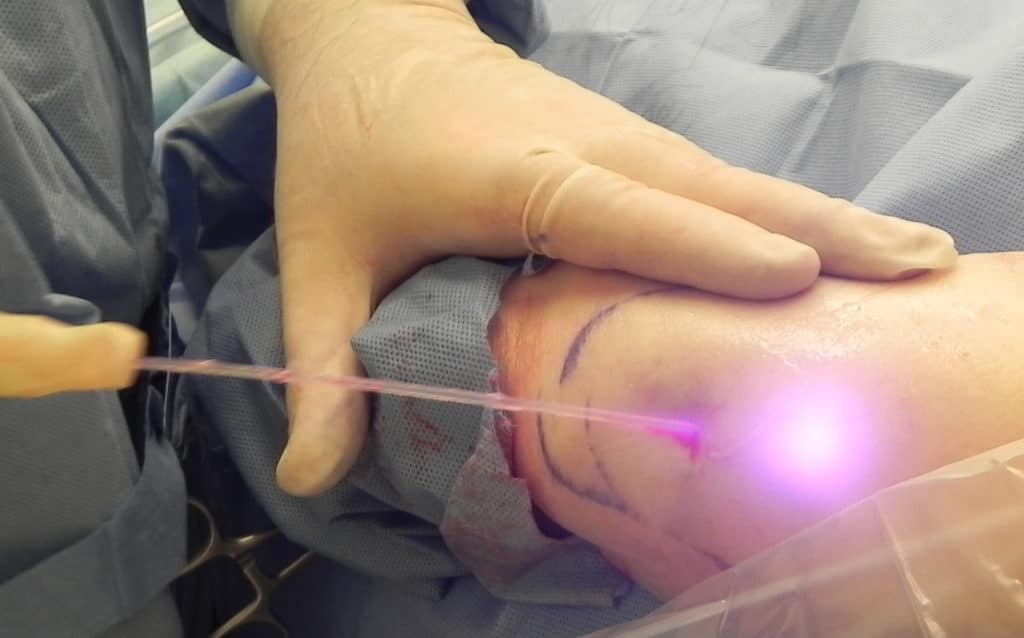
Smartlipo® and Slimlipo® Laser Liposuction Advantages
Smartlipo® and Slimlipo® laser liposuction advantages over other liposuction techniques, such as classical liposuction and ultrasonic liposuction.

Laser Liposuction for Athletes
We offer laser liposuction with the SlimLipo® device under local anesthesia in our Chicago and Winnetka offices. In general patients can return to exercise much more quickly than with other techniques. This makes laser liposuction particularly attractive to athletes, who do not want to disrupt their training schedules.
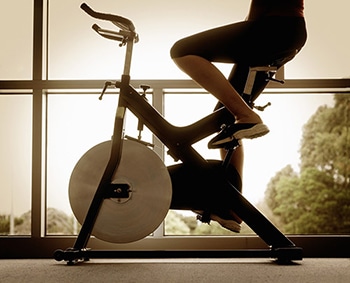
Why liposuction can enhance fitness and health
A significant number of people exercise in order to improve or maintain their body shape and to keep their weight within a desired range. As a person loses weight due to increased exercise a desirable feedback cycle is established. When your clothes fit better, you feel good about your appearance, and you are likely to want to continue exercising.
Liposuction and Loose Skin
There is a persistent myth that I would like to dispel – that there is a way to significantly tighten loose skin involving a technique of liposuction. The ideal candidate for liposuction is a person who is relatively young with good skin tone and localized fat deposits and who has good personal habits of nutrition and exercise.

Practice Blog
Learn more about Dr. John Q. Cook and the non-surgical treatments and plastic surgery procedures available at The Whole Beauty® Institute. Get tips and advice, discover new ways to improve your health and beauty, and more.

Dr. Cook's HealthGems Blog
Dr. John Q. Cook shares his personal thoughts on well-being, quality of life, and more—all drawn from his decades of experience in the industry, studying and working with advanced technology and techniques.
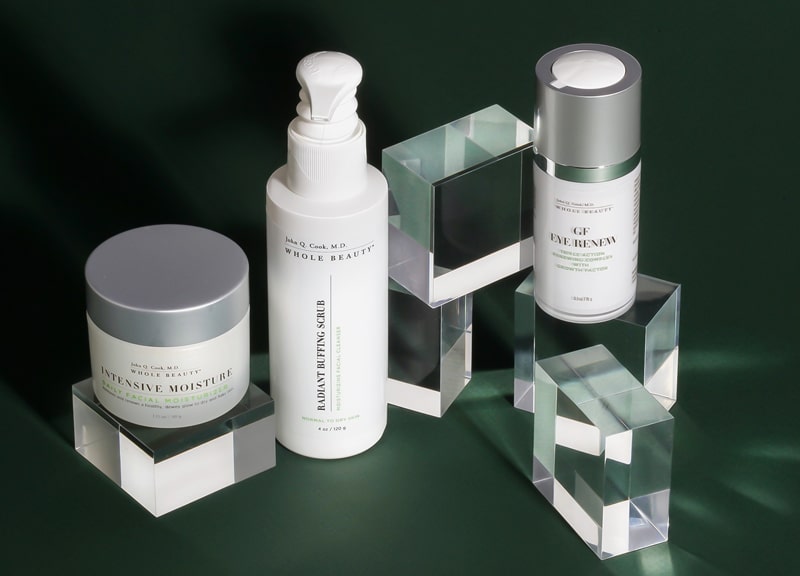
Whole Beauty Skincare
SkinShopMD was created by board-certified plastic surgeon John Q. Cook, M.D. as a trusted source for skin care products. From his years of experience, he developed a portfolio of high quality medical grade products to protect and rejuvenate your skin.

Educational Information
Learn important information about surgical and non-surgical procedures to help you make informed decisions about your desired treatment based on your goals. Topics cover facial surgery, injectables, lasers, breast surgery, body contouring, and other treatments.
Testimonial and Practice Videos
Schedule a Consultation
Schedule a consultation with board-certified plastic surgeon, John Q. Cook, M.D., to learn more about plastic surgery solutions that may be right for you based on your aesthetic goals.
"*" indicates required fields
Our Office Locations
Our locations in the Gold Coast of Chicago and Winnetka in the North Shore reflect our commitment to convenient and discrete concierge-level service.
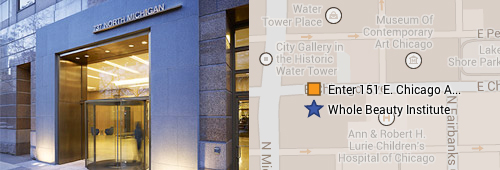
Chicago Office
737 North Michigan Ave., Suite 760 Chicago IL 60611 (312) 751-2112 Entrance at 151 E. Chicago Avenue

Winnetka Office
118 Green Bay Road Winnetka IL 60093 (847) 446-7562
Located directly across from Indian Hill Metra Station