

Why Choose The Whole Beauty® Institute For All Your Non-Surgical & Medical Aesthetic Needs.
Dr. Cook has a deep knowledge of facial volume restoration. He as worked with facial fat transfer for over 20 years and he and the team apply this knowledge to filler technique.
We offer extensive experience including a nurse who was selected by a major filler company to train doctors, mid-level clinicians, and other nurses about proper filler technique.
What sets us apart is our naturalistic technique. We provide each patient with an individualized analysis that builds upon your natural facial structure.
We offer a full spectrum of aesthetic solutions that complement our treatments with fillers.
Education and Credentials

Awards and Recognition


REAL PATIENT RESULTS
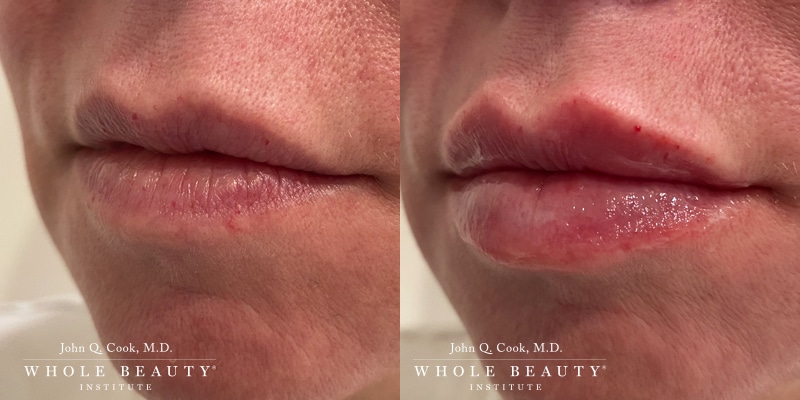
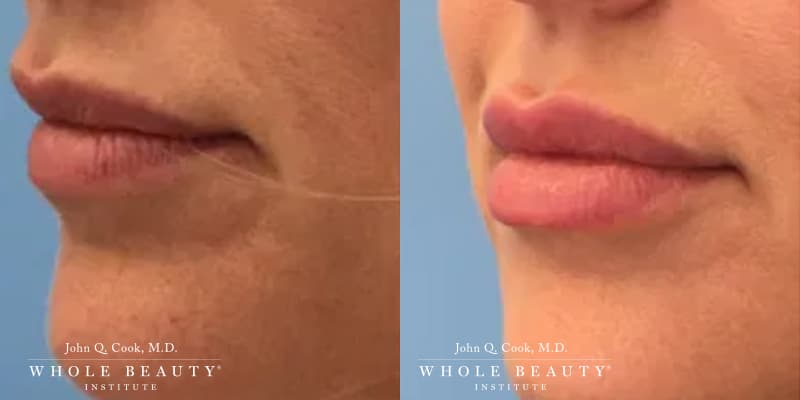
See the difference experience makes. Scroll through before and afters in the photo carousel of facial filler patients treated by Dr. Cook and his team.
Dermal and Lip Fillers
Injectable Treatments Restore Soft Facial Curves and Reduce Creases in Chicago and Winnetka
Under the direct guidance of Dr. John Q. Cook, the experienced clinical team at the Whole Beauty® Institute maintains a leadership position in the field of rejuvenation with dermal and lip fillers. Our Chicago and Winnetka offices offer patients a wide range of techniques and filler materials so that we can tailor a treatment plan that suits each patient’s needs and aesthetic preferences.
There are three types of dermal and lip fillers available from our team: hyaluronic acid-based fillers, stimulatory fillers, and autologous fat. Each material provides unique benefits, so we will educate you on the options and help you choose the ideal treatment. Due to our extensive experience with each of these fillers, we know the best application of each one.
Dermal and Lip Filler Basics
Hyaluronic Acid (HA) fillers are available in a wide range of consistencies, so that we can use different fillers for different purposes. Just as a structural engineer or architect selects different materials for the foundation of a house than for ornamental surfaces, we make use of different HA fillers for different levels of the face.
Stimulatory fillers trigger the body’s own repair mechanism to restore volume in hollow areas.
Decades ago, Dr. John Q. Cook realized the potential of fat transfer to restore deep facial volume. The facial fat transfer technique he developed serves as the reference point for all of the facial volume restoration techniques used at the Whole Beauty® Institute.
Why Choose the Whole Beauty® Institute for Dermal and Lip Fillers?
The first advantage that we offer is Dr. Cook’s extensive experience with fat transfer to restore volume in all areas of the aging face. He has transferred this experience to rejuvenation with the HA fillers and taught these techniques to his clinical team. Patients who come to us for injectable dermal and lip fillers benefit from Dr. Cook’s significant experience with facial volumization. Many clinicians in the United States have only recently developed a familiarity with the use of blunt cannulas for injecting facial fillers, but this is an established and fundamental technique for our team.
The second advantage is the long experience that our team has with non-surgical treatments, including injectable fillers. Dr. Cook understood the potential of certain fillers before they were available in the United States. By traveling to Europe, he was able to learn techniques from leaders and to get a sense of the ideal applications of different dermal and lip fillers prior to their introduction in the United States. Our patients obtained the benefit of Dr. Cook’s experience when these fillers achieved FDA approval. Since that time, we have continued to monitor each new dermal and lip filler as it comes to market so that we can define its best use.
The third advantage is the highly developed sense of beauty Dr. Cook has developed over his lifetime. It takes many years to develop an aesthetic framework, but once it is achieved it is enhanced through careful study of great art—whether a painting by Caravaggio or an Avedon photograph of an interesting face. Coupled with this sense is a strong bias toward naturalistic results, and our clinical team shares this bias.

Contact Whole Beauty® Institute to arrange a consultation for dermal and lip fillers in Chicago or Winnetka. Call 312-751-2112 or send a message online.
Request a consultHyaluronic Acid-Based Dermal and Lip Fillers
Patients at the Whole Beauty® Institute benefit from a growing array of hyaluronic acid fillers, which are versatile, soft, and reversible. There are several different “weights,” including a greater firmness, which can be useful for deeper volume restoration in areas such as the cheek and temple. Relatively “thin” formulations of HA can be useful for finer surface lines. Intermediate thickness HA fillers work well for filling in hollows under the surface of the skin, such as below the corner of the mouth or the crease between the upper lip and the cheek (nasolabial fold).
Our portfolio of HA dermal and lip fillers includes the Juvederm® family (Ultra, Ultra Plus, Voluma®, Volbella®, and Vollure™), the Restylane® family (Restylane®, Refyne®, Defyne®, Lyft, Kysse, and Silk), and Belotero®.
We have found that each filler has specific mechanical and handling characteristics that make it well suited for specific applications. For this reason, we offer our patients a complete portfolio of HA fillers from several manufacturers. We have extensive experience with each of these dermal and lip fillers. This allows us to design a custom portfolio of products that specifically suit each individual patient’s needs. One advantage of HA fillers is that they are reversible. An enzyme known as hyaluronidase can be injected into a treated area, causing the filler to dissipate.
Patients are also reassured when they learn that HA is a natural part of the body’s structure. It is present in the deeper layer of the skin and makes the skin moist and supple. One reason that aging skin thins out is that HA content diminishes as we age.
A Closer Look at Hyaluronic Acid Dermal and Lip Fillers
FDA approval of hyaluronic injectables opened a new era for facial soft tissue augmentation in the United States. In many applications, these versatile dermal and lips fillers have significant advantages over other materials available to soften lines and restore volume. We encourage patients considering these fillers to get a better understanding of the nature of hyaluronic injectables, the range of medical applications, their characteristic advantages and disadvantages, and the qualities you should look for in the clinician who will treat you.
What is Hyaluronic Acid?
Hyaluronic acid (HA) is a natural material found throughout the human body. It has a simple chemical structure that is know as a glycosaminoglycan. In other words, it is simply made of two slightly different sugar molecules that repeat themselves in long chains and form particles of various sizes. The chains connect themselves with chemical bonds known as cross-linking.
Cross-linking is an important characteristic of HA, since without it, the HA will rapidly disappear if it is injected in the body. Think of the cross-linking between the chains of sugar molecules as the “glue” that keeps the HA stable. Companies that manufacture HA can also select various particle sizes. In general, bigger particles are useful when heavy lifting is necessary under a deep crease or in a hollow cheek, while smaller particles are more useful closer to the skin surface.
The configuration of the HA chains is also important. Some fillers are more “stretchable” than others, which may offer advantages in specific facial zones.
Although HA is found in many tissues in the body, we will concern ourselves predominantly with the HA that is found in the skin. The skin can be viewed as having two main layers, an outer cellular layer (the epidermis) that protects us from the external environment and a deeper structural layer (the dermis) that provides resiliency, tone, and support.
The dermis is largely made up of bundles of collagen and elastic fibers that run through a squishy pudding of HA. The dermis also contains fibroblasts, which are cells that manufacture collagen and other materials, including hyaluronic acid. As we age, our fibroblasts can’t make as much of these good materials, so the skin becomes thinner.
What Makes Hyaluronic Acid so Useful?
A clinician has quite a few choices available for soft tissue augmentation in the United States—and an even greater range of options in other countries. This is one of the reasons Dr. Cook has spent significant time traveling to medical conferences and visiting clinicians in European countries. In Europe, an almost Darwinian struggle goes on between all of the possible materials that compete for a doctor’s limited attention. In many ways, this is quite good, since the beneficial and useful materials tend to gain market share, while the ones with problems or disadvantages tend to fade away. Since medical materials and drugs come to market much quicker in Europe than in the United States, an American physician who can speak some French or German can monitor the Europeans and predict future developments in the United States. It’s hard for Dr. Cook to say which knowledge has been of greater benefit to his patients: knowing what will probably turn out to be useful or knowing what to avoid at all costs. He has certainly seen plenty of examples of both. Many years ago, he noticed that European doctors were abandoning other injectable dermal and lip fillers and were moving to HA products. As he learned from his European colleagues and began to develop his own injection technique, he was struck by certain advantages inherent in the hyaluronic products:
First of all, they are soft. There is less of a problem with lumpiness or palpability than with many of the other injectable dermal or lip fillers. A pair of lips may look beautiful, but if you feel a firm ridge when you kiss them, they lose much of their appeal.
A second advantage that springs from this softness is the remarkable versatility of HA dermal and lip fillers. With many other materials, the clinician is limited to a small number of sites that be safely injected: lip borders, nasolabial creases, and other facial grooves and furrows. With HA injectables, a highly experienced clinician can actually build up three-dimensional structures in certain facial zones, especially around the lips. This allows for more of a sculptural approach. At the Whole Beauty® Institute, we use a variety of HA dermal and lip fillers to restore deep volume to the cheeks, the temples, the chin, and other areas that have become hollow from the aging process or from weight loss.
A third advantage is durability. HA injectables persist for months longer than many other forms of soft tissue fillers. To the patient, this means fewer trips to the doctor for restoration.
The fourth advantage, their temporary nature, may at first seem paradoxical. Why wouldn’t it be better just to inject something that will persist for years? After all, there are products out there that supposedly will do just that. There are two powerful reasons why a temporary duration is a desirable characteristic. First of all, if the patient doesn’t care for the result, it will eventually melt away. To achieve their true potential, HA injectables require a highly skilled and visually sophisticated clinician on the other end of the syringe. If a patient is treated by someone who lacks these characteristics, the filler will eventually diminish.
An even more important advantage to non-durability came to Dr. Cook during a visit to one of the European medical congresses. He noticed that physicians with a high level of experience and skill who had used non-temporary injectables in the past were warning others not to do so in their lectures. In each case, the reason was the same: delayed granulomas. No matter what the material, the message was remarkably similar: At first, the doctors loved using a type of injectable, but after several years they began to notice that in a certain percentage of patients, changes began to appear in the skin above the area of injection. These changes consisted of granulomas, which are itchy, raised, red bumps that do not go away. As he looked into the record of these injectable materials, Dr. Cook was struck by the similarity of the pattern:
Stage I: The physician thought he or she had found a lasting injectable that didn’t cause long-term problems.
Stage II: Aggressive marketing on the part of the company that manufactures the injectable material led to uncritical acceptance on the part of certain physicians.
Stage III: Several years later, the physicians discovered delayed granulomas. Since hyaluronic acid is a material that naturally occurs in the body and is broken down through normal turnover, granulomas should be extremely rare. As a practical measure, the team at the Whole Beauty® Institute has performed thousands of injections with various HA products, and we have seen only a tiny number of nodules, which have responded well to treatment.
The aging process continues after a person has been injected with a filler. With a lasting filler, this may become a problem, since the shifting and settling of facial structures might move the material to a lessdesirable area. This problem is largely avoided with HA fillers, which have the additional advantage of reversibility. Hyaluronidase is an enzyme the body uses to break down HA in tissues. This enzyme is available for clinical use. If for some reason too much HA has been injected, so that an area is fuller than a patient desires, it is possible for the clinician to inject hyaluronidase into that area and melt the HA down to a desired size.
The fact that hyaluronic acid is naturally present throughout the body has great appeal. The simplicity of its structure and its gradual natural breakdown in the tissues are added benefits.
What is the Worldwide Experience with Hyaluronic Injectables?
When it comes to facial injectables, there truly is safety in numbers. The more patients who have been treated with a given material and the longer the treatment experience, the more intelligently one can talk about safety. For anyone considering treatment with a dermal or lip filler, a good first question to ask is, “How many people have been treated with this material?”
It is reassuring that millions of facial soft tissue augmentations have been carried out with HA injectables. At the Whole Beauty® Institute, our team has performed thousands of treatments with hyaluronic acidbased fillers. Our extensive experience works to our patients’ advantage.
Remember: Different Hyaluronic Dermal and Lip Fillers Fit Different Needs
Although there is a more limited range of fillers available to patients in the United States than in other advanced countries, patients and physicians have better choices than they did a few years ago. Each dermal and lip filler has a range of applications where it works best. Some are thick and relatively good for lifting tissue. Others are thin and better for very fine lines. Some are of intermediate consistency.
Stimulatory Fillers
Stimulatory fillers work by turning on the body’s repair process, so that cells that produce collagen go into overdrive. This can improve the texture of the overlying skin and fill in hollow areas.
Our portfolio of stimulatory dermal fillers includes Sculptra® and Radiesse®.
Recent research has shown that HA fillers also have a stimulatory component. When a filler is injected into the dermis, this delivers a mechanical stretch to fibroblasts, which causes them to make more collagen and other beneficial substances.
Fat Transfer
Dr. Cook considers a patient’s own fat to be the “ultimate” dermal and lip filler. He has incorporated the technique into his facelift surgeries for decades and was ahead of most of his peers when he realized that lifting alone only solved half of the problem of the aging face. For many patients, the loss of fat in key zones such as the cheek, the temple, the chin, and the framing zone around the lips must be addressed if a rejuvenation is to be complete. It makes sense to replace the missing fat with a patient’s own fat, especially if there is a zone of excess fat somewhere in the body. Over the years, Dr. Cook has developed techniques for the reliable transfer of fat to all major zones of the face.
The transfer process can also be done by itself in both our Chicago and Winnetka offices. The procedure involves a gentle liposuction from a zone of excess fat, concentration of the fat, and injection of the fat through microcannulas. In many ways, fat is the most versatile filler available.
For many of our patients, facial fat transfer is the foundation on which all other injections are based. One common pattern is for the patient to have a fat injections every few years, supplemented by other injectable dermal and lip fillers between the fat transfers.
The Problem with Silicone and Other Options
Over the years, a number of materials have been marketed as lasting fillers for the face. Examples include medical-grade silicone and polymethylmethacrylate microspheres. We have avoided the use of these materials at the Whole Beauty® Institute for several reasons.
Since these materials are not temporary, they become a very difficult problem if they are ever infected.
As the face ages, these materials may also move to locations that are undesirable. As knowledge of medical aesthetics continues to advance, patients who choose this option elsewhere are locked in to what may have become an outdated treatment method.
Dermal and Lip Filler Sessions Start with an Evaluation
Patients who come to the Whole Beauty® Institute benefit from a comprehensive facial evaluation. We review all aspects of your health and activity patterns, as well as any treatments you may have had previously. We discuss your goals and provide individualized solutions that respect your natural identity.
All of our treatments follow the artistic principles and techniques of Dr. John Q. Cook, a recognized leader in aesthetic plastic surgery.
If you would like to have a consultation regarding dermal and lip fillers in the Chicago area, or if you have questions for our team, please call 312-751-2112 or contact us online.
Request a consult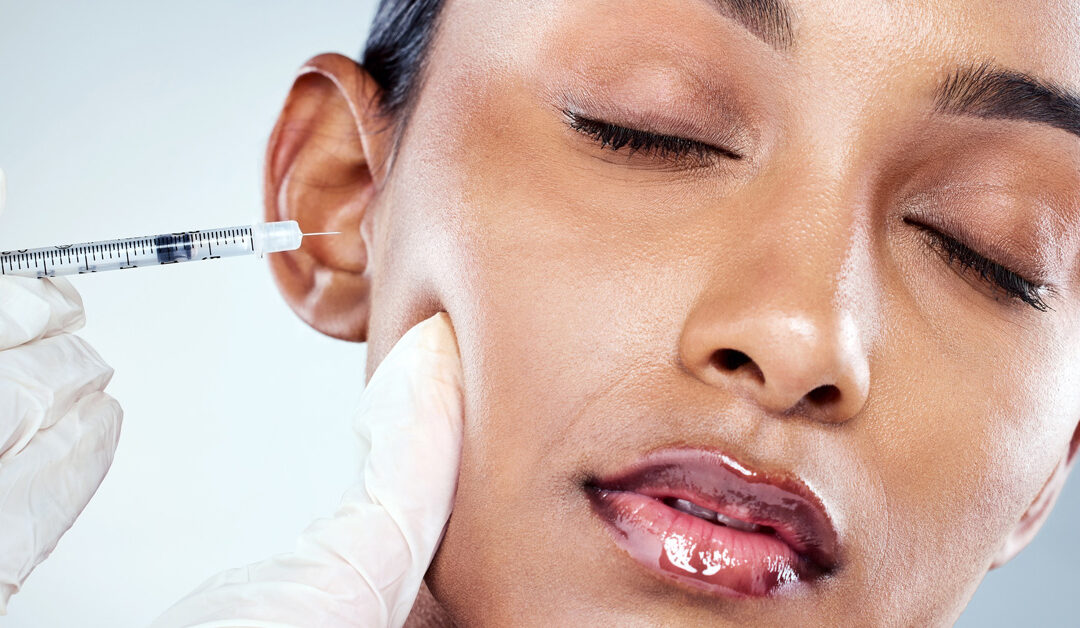
What’s New in Facial Fillers?
What is the latest in facial fillers? Our Chicago-based team has seen an increasing number of patients who are deciding to enhance their look with non-surgical techniques—such as minimally invasive injectable fillers—and who want to know about the most up-to-date...
The Two Main Types of Wrinkles and How to Treat Them
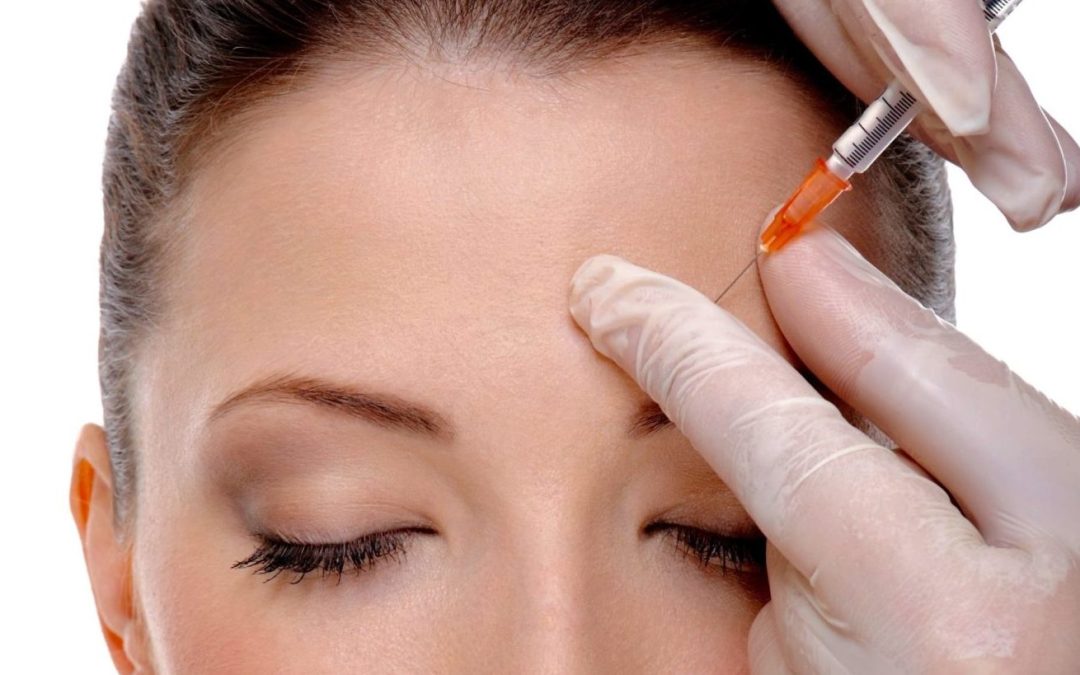
Not all wrinkles are the same. Knowing where wrinkles and lines are located and what causes them to form can help you determine which cosmetic treatment will be best suited for minimizing them. For years, BOTOX® has been considered a gold standard for creating a more...

Long-Lasting Rejuvenation With Facial Fat Transfer
Modern aesthetic science has given today’s plastic surgeons many ways to help you reduce the appearance of facial signs of aging. There are facial rejuvenation solutions for every concern, level of need and budget. Whether you are seeking a quick fix for newly budding...

Dr. Cook's Practice Blog
Explore our practice blog to learn more about non-surgical treatments and plastic surgery procedures available at The Whole Beauty® Institute. Get tips and advice, and discover new ways to improve your health and beauty.

Dr. Cook's HealthGems Blog
Dr. John Q. Cook shares his personal thoughts on well-being, quality of life, and more in HealthGems—from his decades of experience in the industry, studying and working with advanced technology and techniques.
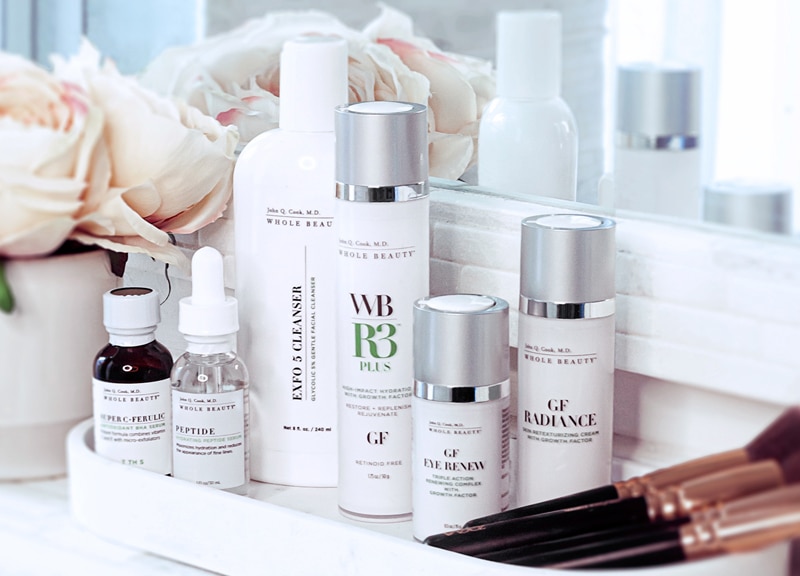
Whole Beauty Skincare
SkinShopMD.com was created by Board-Certified plastic surgeon, Dr. John Q. Cook, as a trusted source for high quality, medical-grade skincare products to protect and rejuvenate your skin.

Educational Information
Get informed about cosmetic plastic surgery procedures and rejuvenating non-surgical treatments to help you make informed decisions about your desired treatment based on your aesthetic goals.
Testimonial and Practice Videos
Schedule a Consultation
Schedule a consultation with board-certified plastic surgeon, John Q. Cook, M.D., to learn more about plastic surgery solutions that may be right for you based on your aesthetic goals.
"*" indicates required fields
Our Office Locations
Our locations in the Gold Coast of Chicago and Winnetka in the North Shore reflect our commitment to convenient and discrete concierge-level service.

Chicago Office
737 North Michigan Ave., Suite 760 Chicago IL 60611 (312) 751-2112 Entrance at 151 E. Chicago Avenue

Winnetka Office
118 Green Bay Road Winnetka IL 60093 (847) 446-7562
Located directly across from Indian Hill Metra Station